
Unlock AI Capacity Without Building a New Data Center
Decommissioning legacy infrastructure can free up power, cooling, and space for AI workloads, without the multi-year wait of a new build.
By Nate Bruns
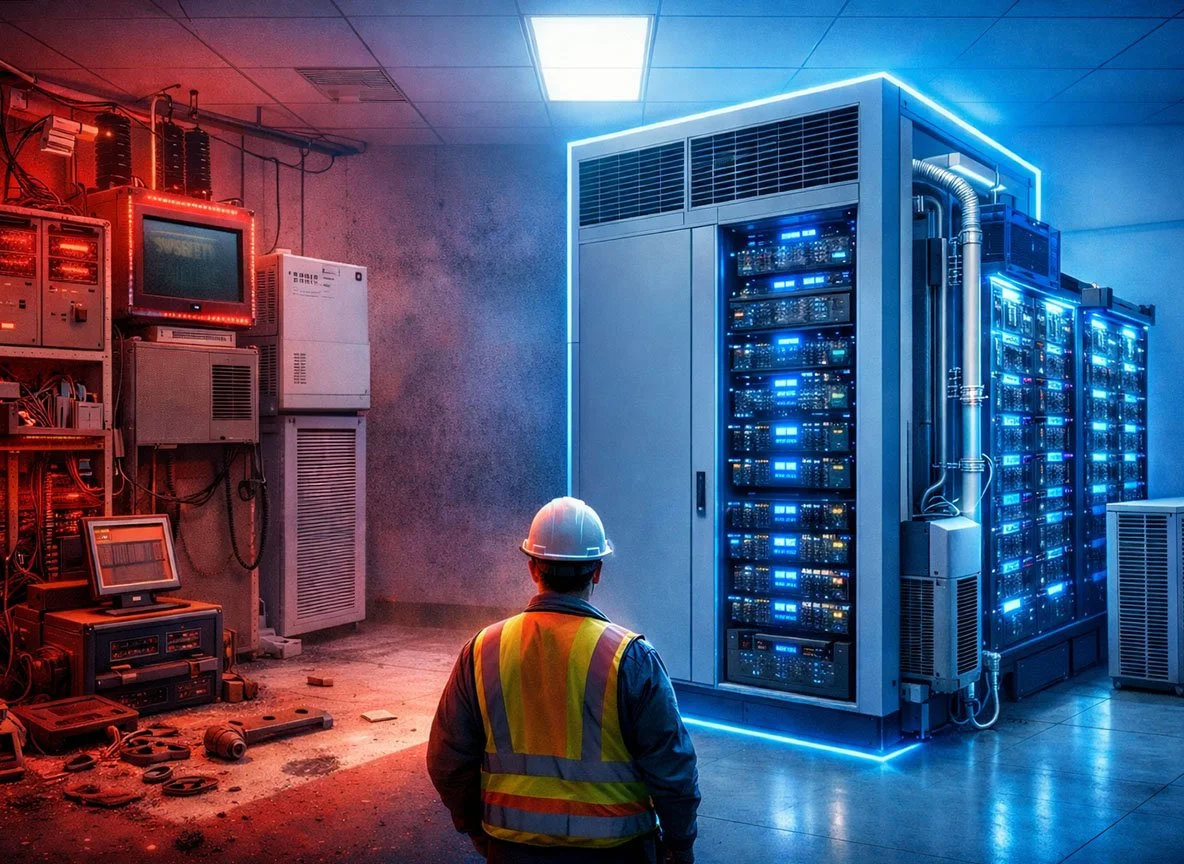
Decommissioning has evolved far beyond simply shutting down old equipment. In today’s AI-driven environment, it is a strategic tool for reclaiming power, improving efficiency, and accelerating capacity growth.
Strategic decommissioning removes
- Aging, low-density compute
- Idle or "zombie" servers
- Old networking and storage infrastructure
- Inefficient cooling systems
Clearing this equipment immediately frees megawatts of available power and cooling, which can then be redirected to new AI clusters, often the fastest way to expand AI capacity without expanding the facility footprint.
AI infrastructure demands dramatically more power and cooling than traditional compute, and much of that capacity is trapped behind legacy, underutilized, or inefficient equipment. Strategic decommissioning clears out aging servers, ghost circuits, outdated cooling, and stranded power, freeing up megawatts that can be redirected to high-density AI racks.
By removing low-density infrastructure, operators can modernize whitespace, install advanced cooling, reduce PUE, and improve reliability for long-running AI workloads. Just as importantly, decommissioning enables faster time-to-market than new construction, letting data centers respond to AI demand in weeks instead of years.
Decommissioning in the AI era
- Frees stranded power and cooling for AI workloads
- Removes aging, inefficient, and underutilized equipment
- Enables high-density AI racks and modern cooling designs
- Lowers PUE and improves overall energy efficiency
- Improves reliability for long-running AI training clusters
- Accelerates capacity growth without new construction
- Reduces cost compared with greenfield builds
- Supports ESG goals through recycling and material recovery
When done properly, decommissioning also supports ESG goals through responsible recycling and material recovery. The result is a cleaner, more efficient, more competitive data center, ready to support the next wave of AI growth. In the AI era, decommissioning isn’t an end-of-life task. It’s a power-unlocking strategy.
Related resources

The 7-Phase Data Center Decommissioning Checklist
A complete 7-phase checklist covering inventory, data security, equipment removal, asset recovery, site restoration, and final review.
Read more →
Abandoned Cabling and Data Center Efficiency
Removing abandoned cabling improves airflow, reduces cooling demand, and lowers fire risk, all of which help PUE.
Read more →